
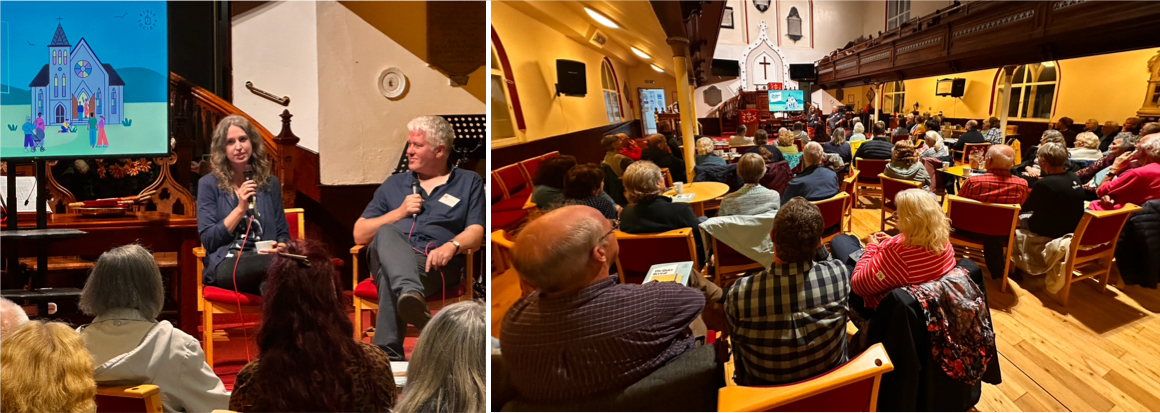
We had a fascinating evening on the 4th September with Rhiannon McAleer looking at the Bible Society’s report ‘The Quiet Revival’. The headlines were that nationally the church is growing and changing. There is a growing spiritual openness (not within the middle aged but within the under 30s) and greater diversity in the church with a third of those under the age of 55 in the church from an ethnic minority, compared with 16% of the population of that age range.
There seems to be vibrant faith around with 67% of people in church weekly reading their bibles, rates of belief in God still high and nominal Christianity (I am a Christian but I don’t go to church) declining. Young people are not likely to use ‘Christian’ as a cultural label. They will only say they are Christian if they mean it and do something about it.
The church is impactful. Belonging to a church gives significantly higher levels of being happy with life, seeing life as more meaningful, giving you hope for the future, feeling less depressed or anxious, but helping you feel more connected to your community and able to make a difference (volunteer, give to others etc).
The findings are all tempered by the fact that 79% of the population never read the bible and 7 in 10 people have no interest in the Bible and regard it as irrelevant to their lives. But they could be more spiritually open if a friend offered to pray for them or asked them to church or showed interest in the Bible. The power of friendship and who you mix with is not to be underestimated.
Whilst there is a new spiritual atmosphere in our nation that openness is not just to Christianity but to all beliefs and practices. There is a need to be biblically confident, to know our bibles and how to handle them responsibly and how to prepare for the spiritually curious. How can we change the idea that understanding the Bible is a challenge and not a chore. People rise to challenges but hate chores!
Exposure as a child to the bible, church and people of faith is a key factor in people finding their own faith later in life. But young people (aged 18-34) are more likely to have their confidence in the Bible often shaken by the media and British culture.
There are opportunities and challenges in this research. A spiritual openness to consider the claims of faith. A challenge to explain and relate faith to everyday experiences and understanding. A need for intergenerational relationships and conversations to strengthen and foster cultures of mutual listening and learning. Culture is shifting and hearts are softening again towards the power of Christianity and the Bible claims the report. We can only hope.